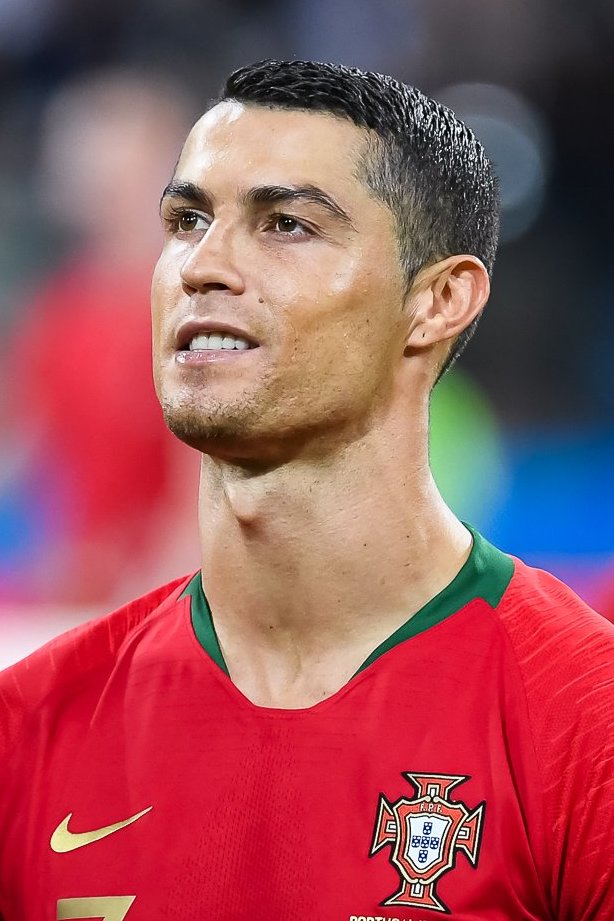
The desert air in Riyadh doesn't just carry the scent of oil and ambition; now, it carries the undeniable aroma of generational wealth. When Cristiano Ronaldo touched down in Saudi Arabia in January 2023, he wasn't just signing a contract; he was minting a new financial paradigm for global athletics, a deal so staggering it recalibrated the very definition of "highest-paid athlete." For the veteran striker, the move to Al-Nassr was the ultimate financial masterstroke, a gilded capstone on a career already overflowing with trophies and hundreds of millions.
The numbers, when laid bare, are almost fictional. Ronaldo’s annual compensation package is estimated to hover around $200 million. But to call it merely a "salary" is to miss the intricate mechanics of this financial behemoth. His base playing salary, while massive at approximately $75 million per year, is only the foundation. The true financial gravity lies in the commercial and ambassadorial components. A reported $100 million annually is tied to his role as a global face for Saudi tourism and governmental partnerships, effectively transforming him into a walking, talking, goal-scoring sovereign wealth fund advertisement. Add in performance bonuses that could push the total closer to $25 million based on goals and titles, and the total figure eclipses anything ever seen in professional sports, dwarfing even the lucrative contracts signed by NBA superstars or NFL quarterbacks.
Ronaldo’s career earnings trajectory reads like an economic growth chart of a small nation. From his humble beginnings at Sporting Lisbon, where he earned a reported $1 million across his first professional season, the figures began their exponential climb. His initial stint at Manchester United netted him around $45 million, but the move to Real Madrid in 2009—the peak of his sporting prowess—saw him accumulate an astonishing $480 million over nine years. By the time he left Juventus and returned briefly to Old Trafford, his lifetime earnings from playing contracts alone had already sailed past the billion-dollar mark. The Saudi deal, projected to be worth over $400 million across its term, ensures his total career earnings will comfortably exceed $1.3 billion, cementing his status as the first footballer to achieve such a monumental financial milestone.
Yet, the pitch paycheck is only half the story. Ronaldo is a brand architect of unparalleled success. His endorsement empire, generating an estimated $60 million annually, is anchored by a lifetime contract with Nike, a deal reportedly worth over $1 billion. This is money that flows in regardless of which pitch he graces. Beyond the sportswear giant, his portfolio is meticulously curated: multi-million dollar deals with companies like Clear Shampoo and Herbalife, all feeding the CR7 machine. Crucially, he retained his image rights in the Al-Nassr deal, a non-negotiable term that ensures he controls and profits directly from his global likeness.
The real secret weapon in the CR7 financial arsenal, however, is his unprecedented digital dominance. With over 600 million followers on Instagram, he is not just the most-followed person on the platform; he is a media channel unto himself. Financial analysts estimate that Ronaldo commands up to $3.2 million for a single sponsored post, translating to an estimated $50 million per year purely from his social media activity. This digital influence provides a level of financial diversification that few athletes, even contemporaries like LeBron James or Lionel Messi, can rival.
The strategic deployment of these earnings is equally impressive. Ronaldo has transitioned from athlete to astute investor, building a legacy that will endure long after his boots are hung up. He partnered with the Pestana Group to launch the Pestana CR7 Hotels, with properties currently operational in locations like Madeira and Madrid. He has invested heavily in the fitness sector with CR7 Fitness Gyms and holds a significant stake in the Insparya chain of hair transplant clinics. His real estate portfolio, valued in the tens of millions, spans multiple continents, ensuring his wealth is protected across diverse asset classes.
The ripple effect of Ronaldo's move has been immediate and transformative for the Middle East. The Saudi Pro League, once a regional curiosity, is now a global destination. Following Ronaldo’s arrival, the floodgates opened: Neymar secured a reported $100 million per year at Al-Hilal, and Karim Benzema matched that figure at Al-Ittihad. Sadio Mané, N'Golo Kanté, and a host of other European stars quickly followed, lured by contracts that are often triple their European equivalents. Saudi Arabia has reportedly injected over $1 billion into player salaries in a single year, leveraging the star power to boost the nation’s global profile—a strategy dubbed "sportswashing" by critics, but undeniably effective in economic terms.
At 39, Cristiano Ronaldo is no longer just chasing goals; he is chasing market share. His Saudi contract is not merely a retirement fund; it is a calculated business decision that maximizes his final years of peak marketability. It proves that the modern athlete can command astronomical fees by blending sporting excellence with unparalleled brand power. As the Saudi investment continues to reshape the global sports landscape, Ronaldo stands as the undisputed financial pioneer, the man who proved that in the 21st century, the greatest asset an athlete possesses is not just their talent, but their ability to monetize their global influence.